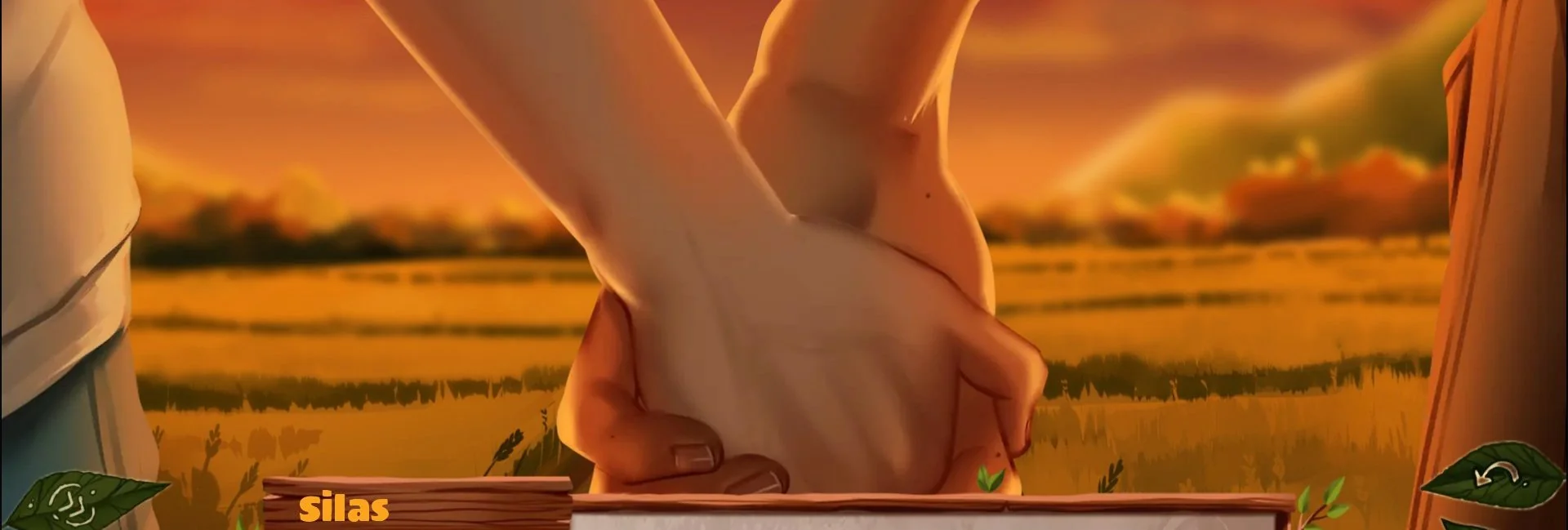
The False Sun Story — Plot, Backstory And Full Timeline
The full story of The False Sun explained — the plot in order, the backstory behind Silas, the hidden stat system, and the themes that decide all 20 endings.
This page spoils everything. Plot, backstory, and the meaning of the endings are all here. If you have not played yet, read the Guide → first — it covers the mechanics without ruining a single scene.
What The False Sun Story Is Actually About
This The False Sun story starts small on purpose. You arrive at your late grandfather's farm for the summer. A boy named Silas is already at the gate, waiting for you like he has been standing there his whole life. You do chores, you talk under trees, you avoid or accept a kiss. There is no monster, no curse, no ghost in the barn. The days are bright and slow.
That is the trap the whole story is built on. Because underneath the farm romance is a story about someone deciding to keep you, told from inside the room where it happens.
The four hidden stats are not a game mechanic bolted onto a love story — they are the story's actual subject. Each one measures the same thing from a different angle: how much of you Silas has. Agility is the self you did not hand over. Bravery is whether you will still speak. Warmth is whether you chose him. Convincing is whether what you show him is real.
Notice what the system never tracks: your safety. That is not an oversight. That is the plot.
The Story, In Order
Before You Arrive
Your grandfather is dead before the first screen. So is the reason Silas is standing at that gate.
Silas grew up as the affair child in a small village that wanted nothing to do with him — not hidden, not pitied, but shut out by the people he lived among, raised without anyone who was obligated to love him. What he found instead was your grandfather, who gave him attention and a place to stand. Then your grandfather died, and the only person who had ever given Silas a place was gone.
So when you walk up the drive at the start of the game, you are not meeting a stranger. You are meeting someone who had exactly one person, looking at that person's replacement.
The game delivers this backstory late and refuses to let you use it. On the Kyle path, after Silas has been arrested, Kyle explains all of it — and then closes the door himself:
"It is not an excuse for anything he has done."
That line is the game telling you how to read every scene that came before it. The backstory explains Silas. It does not absolve him.
Act 1: Arrival — The Tutorial
Sunlight, chores, two minigames, and a first conversation under a tree that looks like nothing. Silas says something romantic. Whether you answer warmly is the first thing the game writes down about you.
The minigames matter more than the farm suggests. Cattle herding and chicken feeding are how agility gets built, and agility is what will decide whether you can fight or run later. This is also where the game's strangest ending lives — fail the chores badly enough and you get a joke ending that sits completely outside the story.
Act 2: The Courtship — Days 1–3
The quiet stretch, and the part players most often misread as filler. Silas asks whether you have had a partner. He tells you about a dream. He asks to stay over. He leans in for a kiss and gives you a split second to decide whether you move first.
Every one of those is a boundary test dressed as intimacy, and the game scores warmth, bravery, and consistency separately. Do the chores yourself and he reads a person with something of their own. Let him handle everything and you read as someone with nothing to keep.
Act 3: The Pier — The Mask Comes Off
Silas invites you to the pier. You go, or you refuse.
If you go into the water, the mask stays on and the romance continues. If you refuse, he drops it in a single line — and the version of him that has been negotiating stops negotiating. You are given one line of dialogue back, a question that reframes the entire last several days:
"What if you're the one who got it all wrong?"
Then he comes for you, and you run, and the game checks everything it has been writing down since the tutorial. Eight of the twenty endings branch from this one moment. This is the hinge of the entire story — not because it is the most dramatic scene, but because it is the audit.
Act 4: The Puzzle And The Nightmare
Whatever route you took, you end up back at the farm, and the bunny statue puzzle opens the last door. Arrange it correctly — largest to smallest, chipped ear in the middle — and you trigger a nightmare.
From here every act of this The False Sun story moves indoors. This is the part of the game that stops being a romance at all.
Act 5: Four Ways Out
You wake up with Silas sitting beside you, watching. What you say next decides which half of the endgame you play.
Ask about the barn and the story becomes a chase: dark paths, a knife you may or may not grab in time, a river you may or may not be able to cross. Say you had a nightmare and the story becomes something worse — no running, no chase, just Silas on the edge of the bed asking you to agree that this is your life.
If you spent the game cold to Silas and warm to Kyle, you get a third exit: someone else arrives, and for once you are not the only person in the room. And if you refused the pier and told him you loved him at the fire, you get the fourth — the only one where he lets you go.
The Timeline
| When | What Happens | What It Sets |
|---|---|---|
| Before the game | Silas's childhood in the village; your grandfather gives him a place; your grandfather dies | The reason he is at the gate |
| Tutorial | You arrive, do chores, meet Silas under the tree | Warmth and agility start being recorded |
| Days 1–3 | The courtship — the partner question, the dream, the first night, the first kiss | Warmth vs. bravery; consistency begins to matter |
| The pier | The invitation, the refusal, the confrontation, the run | The hinge — endings 2–9 branch here |
| The fire | "Do you have feelings for me?" | Last chance to lock in warmth or coldness |
| The puzzle | Bunny statues; the nightmare | The gate to the endgame |
| After the puzzle | Wake-up choice; barn, nightmare, rescue, or letting go | Every remaining ending |
The Endings, Grouped By What They Say
Twenty endings sounds like sprawl. Read by what they leave you with, they collapse into six groups — and only one of them is about you getting what you wanted.
| Group | Endings | What The Story Is Saying |
|---|---|---|
| He lets you go | 1 | The only ending where he chooses treatment over you. Everything else in the game is measured against this one. |
| You get out | 2, 3, 10, 11, 16 | You live and he is no longer in your life. In 10 he is arrested; in 16 he kills your friend Noah first, and gets life for it. |
| He keeps you | 4, 5, 18 | The only three endings where he actually wins. Two of them are the game's neutral endings — and "neutral" here means you are alive and still with him, not that anything went well. |
| You die | 6, 7, 8, 9, 12, 13, 14, 15 | Eight endings, each one a different thing failing at a different moment: the lie at the pier, the swim at the river, the dark in the barn. |
| He dies | 17, 19 | He does not survive either one. In 19 he shoots himself after you tell him to get help, reading it as another rejection. In 17 he forces you to help him die with your grandfather's shotgun — and you are the one convicted, 16 years. |
| Secret | 20 | A joke ending, triggered by failing the opening minigames. There is no story in it, and it does not belong to any group above. |
Three things that table is really telling you.
Surviving is not the same as getting out. The eight endings in "You die" are each one failed check at one moment — the lie at the pier, the swim at the river, the wrong turning in the barn. The five in "You get out" are not the reward for passing those checks. In #10 Silas is arrested; in #16 he murders your friend Noah before that happens, and gets life for it.
The three where he wins are the coldest endings in the game. In #4, #5 and #18 he is alive and you are still with him — which is what "neutral" means here. None of them shows you dead, and none of them shows you free. #5 is the one that earns the title: you are kept long enough to start believing his account of things, and then you close your own way out.
Only one ending is about him choosing to stop. #1, He Let You Go, sits alone in the first group. He is still alive, he is not with you, and he goes for treatment because he decides he has to. Nothing else in the game offers that — which is why most guides treat it as the good ending. The story does not crown it, it just leaves the door open.
Every condition behind these twenty is on the All 20 Endings page → — the branch each one sits on, and the exact choices that trigger it.
The Themes Behind The False Sun Story
Consistency is character. The game's harshest lesson is not that Silas is dangerous — it is that a person who sends mixed signals has no self for anyone to trust. Ending 6 kills you not because you were cold, but because you were warm sometimes and cold other times, and he noticed the pattern in your farm work.
Being wanted is not the same as being safe. Warmth is what Silas asks for, and every point of it you give makes him more certain rather than more calm. The ending where you fake warmth and he catches the lie is the most brutal in the game precisely because you gave him what he wanted.
The backstory is not a defense. The story hands you Silas's childhood at the moment he is already in handcuffs, through the mouth of the one character who refuses to let it count. Kyle describes the village, the shunning, the affair — and then says it is not an excuse. The game is very careful that you hear the explanation and still do not get to use it.
Nobody comes from outside. Apart from Kyle, there is no rescue in this story. No police arrive at the right moment, no friend gets suspicious, no one is looking for you. The farm is not isolated by geography — it is isolated by the fact that you have not told anyone anything, and the story never lets you off that hook.
Every exit is a cost. There is one golden ending and it still costs Silas his place in your life. There is no version of this The False Sun story where the summer ends, you go home, and nobody was hurt.
Story FAQ
Does The False Sun have a true ending?
No canonical one — the game does not rank its endings. Ending 1 (He Let You Go) is the closest thing to a "good" ending and the one most guides treat as the golden outcome, but the game never labels it as the canon.
Is the farm supernatural?
No. There is no ghost, no curse, and no monster. Everything that happens in this The False Sun story happens because one person decided it would, and the game is deliberate about keeping it that way.
Who is the villain?
Silas — but the story spends its whole length showing you why he became one without letting that be an answer. Nothing in the game suggests the village made him do anything; it suggests the village made him someone who would.
What role does the player have in the story?
You are not solving the story, you are the variable in it. Silas does roughly the same things in every route. What changes is what you had to spend by the time he does them.
How much of the story is missable?
The backstory is the biggest missable piece, and it only arrives on the Kyle path after Silas is arrested. Play only the pier branch and you can finish the game having never learned why he was at the gate.
Where To Go Next
| If You Want | Read |
|---|---|
| Every ending and its unlock conditions | All 20 Endings → |
| The scene-by-scene path through each branch | Full Walkthrough → |
| Silas in full — motives, backstory, both versions of him | Silas → |
| The mechanics behind the story | Guide → |
| The characters, briefly | Characters → |
The False Sun is a romance for about two hours and a horror story for the rest of its life. This The False Sun story page covers why: the courtyard, the pier, the fire, and one boy who had exactly one person before you arrived. From here, the Endings Guide → picks up where the story stops branching.